


Key points.
- While the European economy was performing relatively well before the conflict in the Middle East, the energy shock will lead to higher inflation, slower growth, and a more restrictive monetary policy.
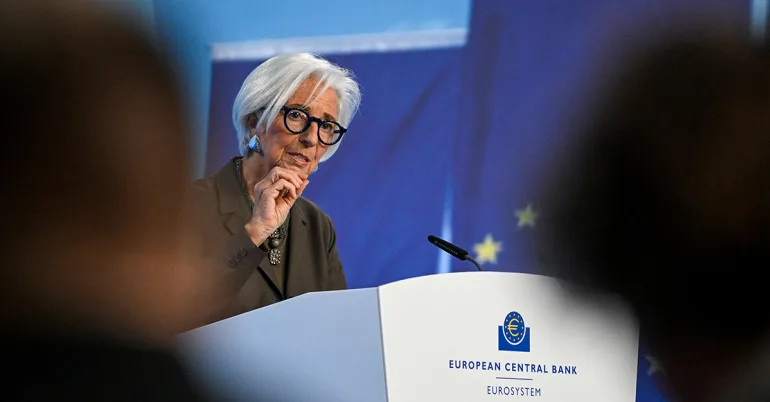
- The European Central Bank is concerned about intervening too late and seeing inflationary pressures spread beyond the energy sector. We therefore expect it to raise interest rates twice this year.
- Such a decision could constitute a monetary policy error which, in our view, would then be corrected in 2027 by a rate cut, contrary to market expectations.
- In developed markets, we prefer Japanese equities to European ones. We maintain our underweight position in global sovereign bonds and our 12-month target of 1.18 for the EUR/USD pair.
The European economy is entering the current energy shock in a better position than it was in 2022. However, given that the energy fallout from the Russian invasion of Ukraine is still fresh, we anticipate an inadequate monetary policy response. We analyze the consequences for the economy and various asset classes.
Before the conflict in the Middle East, the European economy displayed quiet resilience. In 2025, real GDP growth in the eurozone reached 1.5% , a better-than-expected pace that narrowed the gap with the US economy – which grew by 2.1% – compared to the significantly larger gap in 2023-2024. This solid European economic performance was achieved despite the negative impact of increased US tariffs. While the German economy stagnated, activity in Southern and Eastern Europe rebounded.
The European Central Bank (ECB) had succeeded in bringing inflation back to its 2% target on a sustained basis, after it peaked at 10.6% at the end of 2022. Furthermore, during this cycle, the ECB did not overreact to its monetary policy adjustments, unlike in 2014, when it was forced to push interest rates into negative territory and maintain them there for eight years. The trajectory also seemed encouraging: without the strikes against Iran, the ECB would very likely have revised its growth forecasts upward and its inflation forecasts downward at its monetary policy meeting in March 2026.
Before the conflict in the Middle East, the European economy displayed a quiet resilience
Events in the Middle East have forced it to do the opposite. Rising energy prices now threaten Europe’s economic outlook. Even in our baseline scenario of a short-term conflict , we still project an average oil price of USD 90 per barrel over the next six months, severely penalizing the continent as a net energy importer. In Europe, the price of natural gas—a vital energy source for heating across the continent— remains around 40 percent above its pre-crisis level . The damage to key energy infrastructure in the Middle East, which supplies European countries, could take years to repair.
Lingering memories of 2022
Central banks can usually disregard the impact of a temporary energy shock. If energy prices stabilize or fall in line with futures prices—that is, contracts for delivery at a future date—inflation will automatically normalize without any lasting impact. Any monetary tightening, once it begins to take effect, would only exacerbate the negative impact of energy prices on growth. The ECB, due to its strict inflation-targeting mandate, might, however, feel compelled to react to such a shock, unlike the Federal Reserve (Fed), which must also calibrate its monetary policy to maximize employment.
In a speech last month, ECB President Christine Lagarde also emphasized that the memory of the high inflation of 2022 remains fresh in European minds, suggesting that companies could pass on costs more quickly and workers could demand higher wages. Such so-called “second-order” effects could have a more lasting impact on prices.
For these reasons, we now expect the ECB to raise its key interest rates twice in 2026, starting in June, to mitigate these second-order effects linked to rising energy prices. In our view, such a decision could constitute a monetary policy error that could further weaken the European economy. Unlike in 2022, signs of domestic inflationary pressures are scarce today. The labor market is in equilibrium, wages are not accelerating, and households are not spending the generous fiscal stimulus they did in the aftermath of the pandemic. Nor is there any evidence of strong latent demand in the economy. Furthermore, inflation expectations remain subdued.
We now expect the ECB to raise its key interest rates twice in 2026, starting in June, in order to prevent these second-order effects linked to rising energy prices.
The ECB’s current key interest rate of 2% also appears broadly “neutral,” meaning a level that neither stimulates nor hinders growth. Therefore, we believe that the two 25-basis-point hikes we anticipate this year will subsequently need to be withdrawn, as the euro area economy will enter 2027 against a backdrop of easing inflationary pressures and increased risks to growth. This runs counter to market expectations, which still anticipate the ECB maintaining its rates at 2.50% throughout 2027.
A better protected economy
During the 2022 energy shock, the ECB was slow to raise interest rates and is now keen to avoid repeating that mistake. Yet the European economy is far better positioned to manage the current energy shock than it was four years ago. Forced to sever their ties with Russian gas, governments across the continent quickly diversified their supplies and invested heavily in renewable energy . The region’s fiscal response also appears more targeted and measured this time around. We estimate that in 2022, governments allocated 2.5 percentage points of GDP to measures aimed at protecting businesses and consumers from rising energy prices. Today, these measures are more moderate and far less likely to fuel inflation.
The European economy is much better positioned to manage the current energy shock than it was four years ago.
European growth is also benefiting from stronger structural support following Germany’s large fiscal stimulus package . A special €500 billion fund for infrastructure, defense spending, and decarbonization measures will support growth for more than a decade, with positive spillover effects across the continent. Germany’s military procurement is increasingly directed towards domestic and European suppliers. In Southern Europe, growth is also being supported by continued disbursements of EU funds.
That said, the continent remains vulnerable to rising energy prices, and in March, consumer confidence fell to its lowest level in two years. With domestic demand being the main driver of growth, we have lowered our full-year forecast to 0.9%, as the loss of purchasing power, increased uncertainty, and monetary tightening are all expected to have a negative impact.
With domestic demand being the main driver of growth, we have lowered our full-year forecast to 0.9%.
Investment implications
After three years of stagnant profits for European companies, analysts anticipate a rebound in earnings growth to 12% this year. We consider these expectations overly optimistic. Rising energy prices are weighing on production costs and corporate margins at a time when their pricing power is becoming more limited. Although European equity valuations have adjusted, they remain above their long-term averages. A persistently high interest rate environment is also likely to influence sentiment and limit upside potential from current levels. We maintain a broadly neutral exposure to global equities and, within developed markets, prefer Japan’s outlook to Europe’s.
We are also maintaining our exposure to global sovereign bonds, including those of major European economies, at underweight levels, given the risks of rising inflation and budget deficits. Following the announcements of a ceasefire and negotiations between Iran and the United States, investors have begun to reassess their recent extreme pessimism regarding the euro. Our 12-month target for the EUR/USD pair remains unchanged at 1.18.